Iranian-American Protesters Stand Against Their National Team at the World Cup
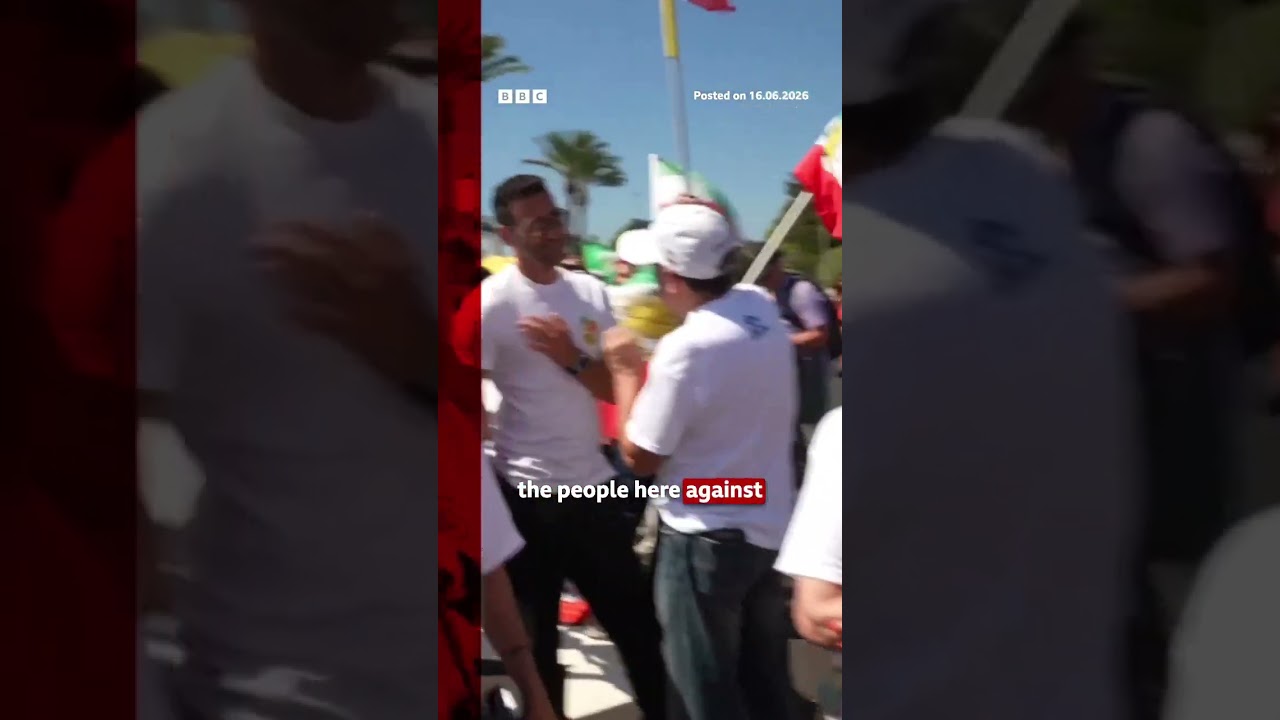
The bustling streets outside the Los Angeles stadium pulse with an air of tension and anticipation. In a sea of faces, many of them adorned with the pre-Islamic revolution lion and sun flag, a significant gathering of Iranian Americans has emerged, destined for a protest rather than for celebrating their national football team’s game against New Zealand. They are not here to cheer; their mission is rooted in a heart-wrenching desire for change.
The sentiments echoed by the crowd are clear: “We are against this team; they don’t represent us.” Voices rise in unison, expressing deep resentment toward the players and the Iranian regime. The crowd channels their frustration into a peaceful demonstration, insisting that the team reflects the oppressive government rather than the vibrant spirit of the Iranian people. This version of the national narrative sharply contrasts the usual enthusiasm associated with sporting events, where allegiance typically rests with national teams.
Los Angeles, often affectionately termed "Tehrangeles," hosts the largest Iranian diaspora outside of Iran. It serves as both a home and a hub for those who fled the regime in search of freedom. Here, deep-seated feelings about representation and identity collide with the global spectacle of the World Cup. The atmosphere is charged, as these Iranian Americans feel a responsibility to voice their dissent for their compatriots back home.
The lion and sun flag—an emblem banned by FIFA—stands prominently among the protesters. Once the national symbol of Iran before the 1979 revolution, it has morphed into a powerful representation of resistance against the current regime. For many in the crowd, this flag signifies more than national pride; it embodies a yearning for democracy, human rights, and justice. The prohibition of such symbols inside the stadium has intensified feelings of frustration and disappointment amongst those gathered.
When confronted about these overwhelmingly political sentiments, Iranian striker Mehdi Taremi offered a diplomatic response, stating, “We’re here to play for everyone, both here and in the country, and we’re not here to get involved in politics.” Yet, the reality of playing for a nation shrouded in turmoil makes such neutrality nearly impossible. The players, while unified in their goal to participate in the World Cup, inadvertently become actors in a much larger political narrative—a narrative steeped in the cries for change and the demand for recognition.
The dichotomy between sports and politics often clashes during significant global events. Yet, in cases like this, it is difficult to disentangle the two. The themes resonating from the crowd echo their desire for justice—justice suppressed by a regime that has silenced dissenting voices. As the voices of the protesters roar, the players are thrust into a spotlight from which there is no retreat.
Beyond the immediate scope of the protest lies a broader concern: the implications of these sporting events when intertwined with socio-political affairs. The World Cup, perceived as a platform for unity and celebration, transforms into a stage where underlying societal tensions manifest. It is a moment where athletes become symbols, where every act and every cheer carries weight and significance.
As the crowd gathers in Los Angeles, one cannot help but recognize the intricate tapestry of emotions at play. The vibrancy of the community contrasts sharply with the sorrow of those left behind in Iran. The unity of purpose among protesters symbolizes not merely opposition but an authentic longing for representation—no matter how complex the circumstances.
In the world of sports, lines are often drawn, and allegiances forged. For many Iranian Americans, this World Cup is a reminder that their struggle transcends the boundaries of the pitch. It serves as a rallying cry—an urgent plea for freedom, justice, and permanent change. Their voices will continue to resonate, both in stadiums and beyond.